

GAMSTOP Exclusion and Funding Obligations at Shuffle Casino
When you land on this page you are weighing one specific site against the standard for UK gambling: a licence from the Gambling Commission, not merely a logo on the homepage. That distinction matters because a foreign operator can look identical while offering different protection for your funds and a different route for complaints. Check the licence number in the site footer and confirm it against the Commission register yourself; an unregistered number is the kind of error that costs real money. UKGC-licensed operators must also offer GAMSTOP self-exclusion and contribute to GamCare funding, which foreign sites often do not.
Does the operator hold a UK Gambling Commission licence and what does that cover?
Finding the entry, not the badge
The logo on a homepage does not prove a licence; the register entry does. Start with the UK Gambling Commission’s public register and search by the company name shown in the site’s terms, not by the brand name. Many sites let one licence cover several operating brands, so the company name is the reliable key.
If the register shows an active licence for the company behind shuffle casino, the site must meet UK standards on game fairness, segregation of customer funds and complaint handling. Those standards are the reason a UK licence matters more to a player than a badge on a homepage. If the licence is absent or expired, the operator is operating outside that framework and the protections do not apply.
What a licence does and does not do
A UK licence is not insurance against loss. It does not guarantee that a bet will be settled in your favour, that a bonus will be converted into withdrawable cash, or that an operator will pay out when it is being investigated. It does give you a route to an independent Alternative Dispute Resolution provider when the operator refuses to resolve a complaint, and it means the commission can take enforcement action against breaches.
The coverage also has boundaries. Verification requirements still apply, and an operator may suspend an account or withhold a payout while identity checks are incomplete. Self-exclusion schemes such as GAMSTOP work alongside licensing rules instead of inside them, so a licence does not replace personal control settings.
One practical test: note the licence number and expiry shown on the site, then confirm the same number and a current date on the register. A number that belongs to a different company, or an expiry that has passed, is a signal to stop before making a deposit.
The single most actionable fact about Shuffle Casino’s licensing is that it is not licensed by the UK Gambling Commission. If your priority is playing on a site that must comply with UK rules on age verification, affordability checks, and responsible-gaming tools, this operator does not meet that bar. The site instead carries a Curacao Gaming Authority licence, reference OGL/2024/1337/0628, which permits it to offer services to the UK market but under a different, less stringent regime.
What that regime does not provide is the UKGC’s player-fund safeguards. Under UK rules, operators must keep customer money in segregated accounts and are subject to regular audits. Curacao’s requirements are less prescriptive on exactly how player funds are held or tested. There is also no automatic right to free arbitration through the UKGC’s designated adjudication service. If funds go missing or a bonus is handled unfairly, your recourse narrows to the operator’s own complaints procedure and, at best, the Curacao authority.
This does not make the site unusable. Many UK players accept offshore licensing in return for wider game selection and faster account onboarding. But the trade-off is real: you gain flexibility and you lose a layer of regulatory insurance. Treat the Curacao licence as a permission to operate, not as a substitute for UKGC oversight.
shuffle casino: operator details
Which credentials apply to Shuffle Casino in this market?
Yeti Casino bonus | Free spins
| Brand | Details |
|---|---|
| shuffle casino | UK is a prohibited jurisdiction; Curacao licence only, no UKGC |
is not available to players in the United Kingdom, and treating it as an option carries a real risk instead of a minor inconvenience. The operator classifies the UK as a prohibited jurisdiction, which means its terms offer no access to UK regulatory protections such as GamStop self-exclusion or IBAS dispute resolution. A UK-registered operator normally carries these safeguards, but this one does not hold a UK Gambling Commission licence at all. It operates under a Curacao Gaming Authority licence (OGL/2024/1337/0628), issued to Natural Nine B.V. If you register and later attempt to cash out above roughly $2,000–$3,000, the operator may ask for Level 2 verification and submit your documents, which can freeze the account because of the jurisdiction restriction. There is no benefit in testing that boundary, because the rules are written to stop the process instead of to accommodate it.
Read the credentials for Shuffle Casino in the context of the market they cover.
Games and how they are chosen
Where the games come from
Shuffle casino does not build its own slot machines or bingo software. Instead it aggregates titles from external developers, each of which controls the game’s mathematics, graphics and outcomes. That structure shapes everything a player notices: why some games run fast on mobile, why bonus rounds behave differently, and why a title can disappear from the lobby without warning.
The supplier name sits beside each game in the lobby. Checking it is the fastest way to judge what a game will feel like, because different developers specialise in different styles. Some focus on frequent small wins, others on larger but less frequent payouts. Shuffle casino poker and bingo products come from yet another set of providers, so the same brand logo does not imply a consistent experience across categories.
Reading the odds before players stake
A game’s long-term behaviour is set by its return to player percentage, a figure each provider calculates from its random number generator. Higher RTP means a larger share of wagers returns to players over millions of plays, but the number says nothing about a single session.
Consider the example of two hypothetical titles. A £10 stake on a game with 96% RTP and high volatility might sit near zero for many spins before a larger win appears. Another £10 on a 97% RTP title with low volatility could return small wins more regularly. Both fit their stated percentages; only one matches a player who prefers frequent action.
Shuffle casino demo versions let you test this without depositing. Read the pay table and information screen for the published RTP and volatility, then decide whether the rhythm suits your bankroll. Remember that a game advertising a progressive jackpot will typically carry lower base returns, because a slice of each wager feeds the growing prize. You control your spending; gambling is not a way to make money.
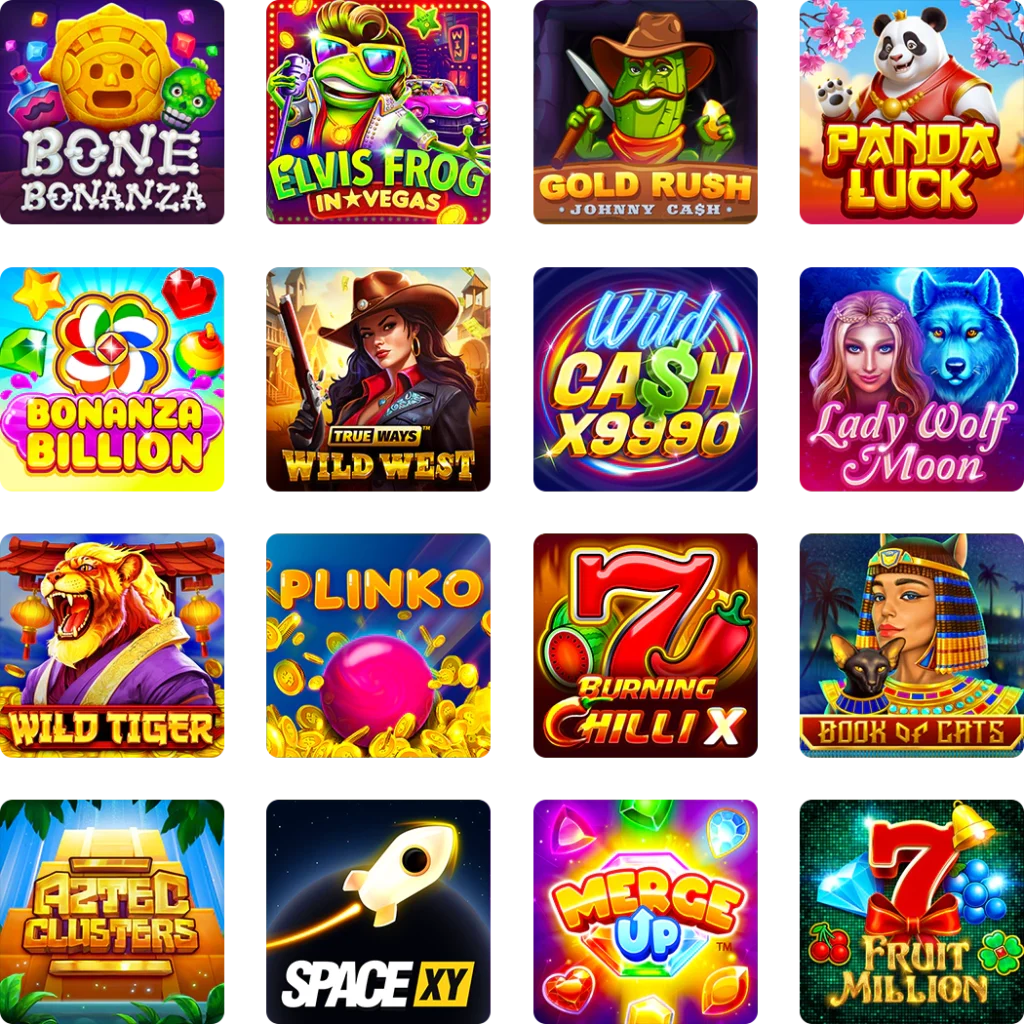
The provably fair Originals are where the portfolio’s most actionable feature lives, and they are also where the assumption behind them stops being useful. In Plinko, Crash, Dice, Limbo or Mines, the game publishes a server seed, a client seed and a nonce before the round ends, which lets anyone recompute the result. This works only if you actually use the verification tool the game provides and compare it against the seed shown at the start of that round; watching the animation alone proves nothing. It also does not extend to the slots or tables operated by live dealers, whose outcomes are governed by a standard RNG certificate and a physical or virtual dealer, not by a hash you can recompute yourself.
Bonuses and the conditions that bind them
What the offer actually costs you in play
Accepting a bonus binds you to a set of conditions that determine whether winnings are withdrawable. The visible figure in the banner is not the amount you can cash out; it is the starting balance for a wagering obligation. Every term that follows — the multiplier, the eligible games, the maximum stake allowed per spin, the expiry date and the withdrawal cap — shapes whether the offer ever converts to real money.
Which game actions count towards the requirement
Most offers require you to bet the bonus amount a set number of times on qualifying games. Only stakes on eligible titles count toward that target, and a single bet larger than the permitted maximum can invalidate progress. Slots typically contribute fully, while table and live games may contribute a fraction or none at all. Consider an example instead of an operator’s actual offer: a £10 bonus with a 30× requirement means £300 of qualifying stakes before the balance becomes withdrawable, subject to the stated maximum cashout.
The decisive detail is often the cap. Even after meeting the wagering target, a maximum cashout limits the amount you can withdraw from winnings. Some bonuses also apply different requirements to free blinds or bingo promotions, so each offer needs its own check before accepting it. If the terms are ambiguous, the written conditions govern and an unmet requirement usually voids the bonus and any winnings generated from it.
shuffle casino offers a 100% match on the opening deposit, capped at $1,000. To qualify you must put down at least $20, and the wagering load sits at 35 times the combined total of that deposit and the matched bonus. That basis is the operative detail: a $20 deposit paired with a $20 bonus creates $800 to play through instead of $400, which changes the time and the risk profile of the offer considerably. Note that the bonus expires 22 days after activation, so the full 35x needs clearing inside that window.
Vavada casino bonus | terms, wagering and withdrawal limits
Sweet bonanza casino | what actually counts
Eurobets casino no deposit bonus
Deposits, withdrawals and how long money takes to move
Where the money actually goes
Deposits arrive almost instantly when the method and the casino agree on currency and routing; withdrawals are a different story. The site usually processes a withdrawal request within a set window before the funds leave its accounts, and the clock only stops once the chosen provider releases the money. Card withdrawals can take several working days, e-money wallets often settle in under a day, and bank transfers may take longer still. This split matters most when you are watching for funds to land: the operator’s processing status is not the same as the money being in your account.
Jackpot charm casino | mobile HTML5 slots and table games
Where fees and limits live is also worth locating up front. The casino publishes minimum and maximum deposit amounts, withdrawal caps and any chargeable methods in its payments or banking area, and a separate terms page may describe wagering or bonus restrictions. If those pages are hard to find, the account dashboard often carries a condensed version alongside the balance. Treat any figure you see as conditional: operators change limits by method and by account status, so a number that applied last month may no longer apply.
Why a withdrawal can stall
The most common reasons a payout is delayed are not technical failures but missing information. Verification holds a withdrawal until the casino can match the money to a verified identity and address; payments teams sometimes request documents again when an earlier submission is unclear. A payment method must also be compatible with the withdrawal route — many operators send funds back to the original deposit method, which means a card used to fund play may be the only acceptable destination. Attempting to cash out to a different account often triggers a manual review and adds days.
Check the account dashboard for a pending or verified status before assuming the casino has withheld money. If a request remains pending well past the stated processing window, or the dashboard shows no route available for your balance, raise the issue with support and quote the request reference.
UK players must be 18 or over. The Gambling Commission regulates licensed operators, and self-exclusion is available through GAMSTOP; GamCare and BeGambleAware offer help, as does the National Gambling Helpline on 0808 8020 133.
Shuffle Casino accepts only cryptocurrency, so UK players cannot fund an account with a debit card, e-wallet or bank transfer. Every deposit and withdrawal moves as a blockchain transaction, and crypto payouts carry no stated maximum cap on standard accounts. The operator does not quote a fixed processing window; it simply states that withdrawals are processed and submitted on-chain, meaning settlement depends on blockchain congestion and network fees instead of a stated service level.
Account access, verification and getting help
Once the account is made
After registering at shuffle casino, the first thing to check is whether the address you used can still receive mail, because the operator sends account alerts, bonus codes and verification links to that inbox. A change of email then has to be made from inside the profile instead of through a support request, since the support team cannot move an address on its own without confirming your identity first.
Recovery works the same way everywhere. A password reset does not expose how many attempts have failed, and repeated wrong guesses can trigger a short lock on the address. If that happens, waiting for the lock to clear and then using the reset link is faster than asking an agent to look at the record; the lock is enforced by the system, not by staff.
Proving who you are
The operator requests identity documents when it needs to be sure the account belongs to an adult aged 18 or over. A passport or driving licence confirms name and date of birth; a recent utility bill or bank statement confirms the address. Upload these in the verification area of the account instead of emailing them, and allow a few days for the check to complete before assuming there is a problem.
Getting help
When a bet settles incorrectly, a bonus does not apply, or a withdrawal stalls, the help desk is the right first stop. Give the game name, the time of the event and any transaction ID, and attach a screenshot where it shows a balance or result screen; that often resolves the query without further questions.
Be aware that agents work to published opening hours and deal with messages in the order they arrive, so a reply within minutes is not guaranteed. For self-exclusion across participating operators, GAMSTOP provides a single request; the UK Gambling Commission sets the rules for licensed sites; GamCare, BeGambleAware and the National Gambling Helpline on 0808 8020 133 offer independent advice.
The deciding fact is that Shuffle Casino lists the United Kingdom among its prohibited jurisdictions. For a UK-based player this changes the answer from ‘how to register’ to ‘you cannot lawfully open an account here’. The operator’s terms do not offer a UK-facing licence, which means GamStop self-exclusion and the IBAS dispute-resolution route do not cover your balance. If you register with a non-UK address and a non-UK payment method, you place yourself outside the protections of UK regulators instead of onto a UK-licensed site. Treat the UK flag as a hard block, not as a workaround for a missing payment method.
Frequently asked questions
Is Shuffle casino legit? Legitimacy comes from the operating licence and the terms it imposes, not from a review summary. For a UK player this means checking that the Gambling Commission registration number is current and matches the operator running the site, then confirming the account uses that same registration. A foreign licence does not extend UKGC protections to UK players, and a brand name, domain suffix or favourable review is not proof of either. Treat independent reviews as clues, not evidence: they describe what a casino advertises, not whether a payout was honoured.
What should a player do when a bonus credit or a wagering record does not match the terms? First identify which record is wrong — the credited bonus amount, the amount wagered, or the remaining requirement shown in the account. Compare it against the published terms for that specific offer, because different promotions carry different rollover multipliers and game weightings. If the discrepancy is real, ask support to quote the transaction reference instead of a general balance figure; a stale screenshot will not settle it. Where the operator cannot reconcile the figure, treat the bonus as unapplied until it is corrected.
What happens to a withdrawal that has not arrived by the expected date? A delayed payment is usually a processing delay or an unresolved verification request, not a lost sum. Check whether the operator has flagged missing identity or payment evidence, and confirm the approved withdrawal date against the terms for the chosen method instead of a marketing claim. If the delay passes the stated period and no document request exists, open a support ticket quoting the transaction reference and the approval date. Keep the record of the request, since a written trail makes it easier to escalate to the regulator if the matter remains unresolved.
Staying within your limits while you play
The first limit to set is age: UK law and the Gambling Commission require you to be 18 before any account or stake. Beyond the age gate, the most effective control is self-exclusion through GAMSTOP, which blocks access to licensed sites instead of relying on the operator’s own settings alone. Set a deposit or loss cap in the account tools before starting, and treat any attempt to recover what you have lost as a sign to stop instead of to continue. If that urge persists, GamCare and BeGambleAware offer support via the National Gambling Helpline on 0808 8020 133. Limits only work if applied to a verified account; an unverified balance is not a reliable guide to what you can afford to lose.
