

Running a business includes several tasks and daily to-dos that can add up. There are multiple numbers involved, one of which is your Merchant ID number. Here is everything you need to know about your Merchant ID, in one simple guide.
What is a Merchant ID Number?
Merchant ID Number Lookup Table of Contents
A Merchant ID number (MID), is a unique code assigned to a merchant by their payment processor. The bank assigns this number when a business applies for a merchant account with the processing service. Every merchant has a different ID number, much like every individual has their tax ID number.
The merchant ID is used for a variety of things. Its main purpose is to identify the merchant to all associated parties during an online transaction. It is used when the merchant is involved in credit or debit-card transactions. These transactions must be secure to protect the information of the consumer and the merchant. The ID number helps keep it secure by identifying the merchant by number, instead of by name.
To acquire a merchant account and Merchant ID, you must first verify that your business is legitimate. Generally, the payment processor will require articles of incorporation and an EIN number before setting up an account for your business. This process will be outlined in the application package for the processor you’ve chosen to use.
How to Get a Merchant ID Number
A merchant ID number is assigned to a business by the acquiring bank, or payment processor. To receive this number, you must first apply to be a merchant with that company. There are tons of payment processor on the market, so it’s important to interview two or three prior to making your selection. You can read more about that process HERE.
Once you’ve chosen your payment processor, you’ll need to apply for an account with them. The application process will vary, depending on the processor. However, most vendors will require basic business information, filed articles, EIN number, etc. They may also require some personal information about you.
Once you go through the application process, your vendor will be able to tell you the next steps. It is usually a simple process that only takes a few business days to complete. Depending on the bank, some credit checks may be involved, so be sure to ask that question before completing your application.
Here is a summary of the process:
- Apply for a merchant account
- Application goes into underwriting, during which time the processor reviews your application and requests additional information if necessary
- Processor will present you with a term sheet, which outlines their terms of agreement and the specifics rates they are offering you for their services
- Negotiate back and forth with the processor on the terms
- Both sides come to an agreement and sign the contract
- The processor creates your business account
- Merchant ID (MID) is created and shared with you
- Begin processing card payments
There are obviously more intimate details surrounding this process than what is shared here. Those details will come directly from your processor, but this is a basic overview of what you can expect.
How to Lookup a Merchant ID Number
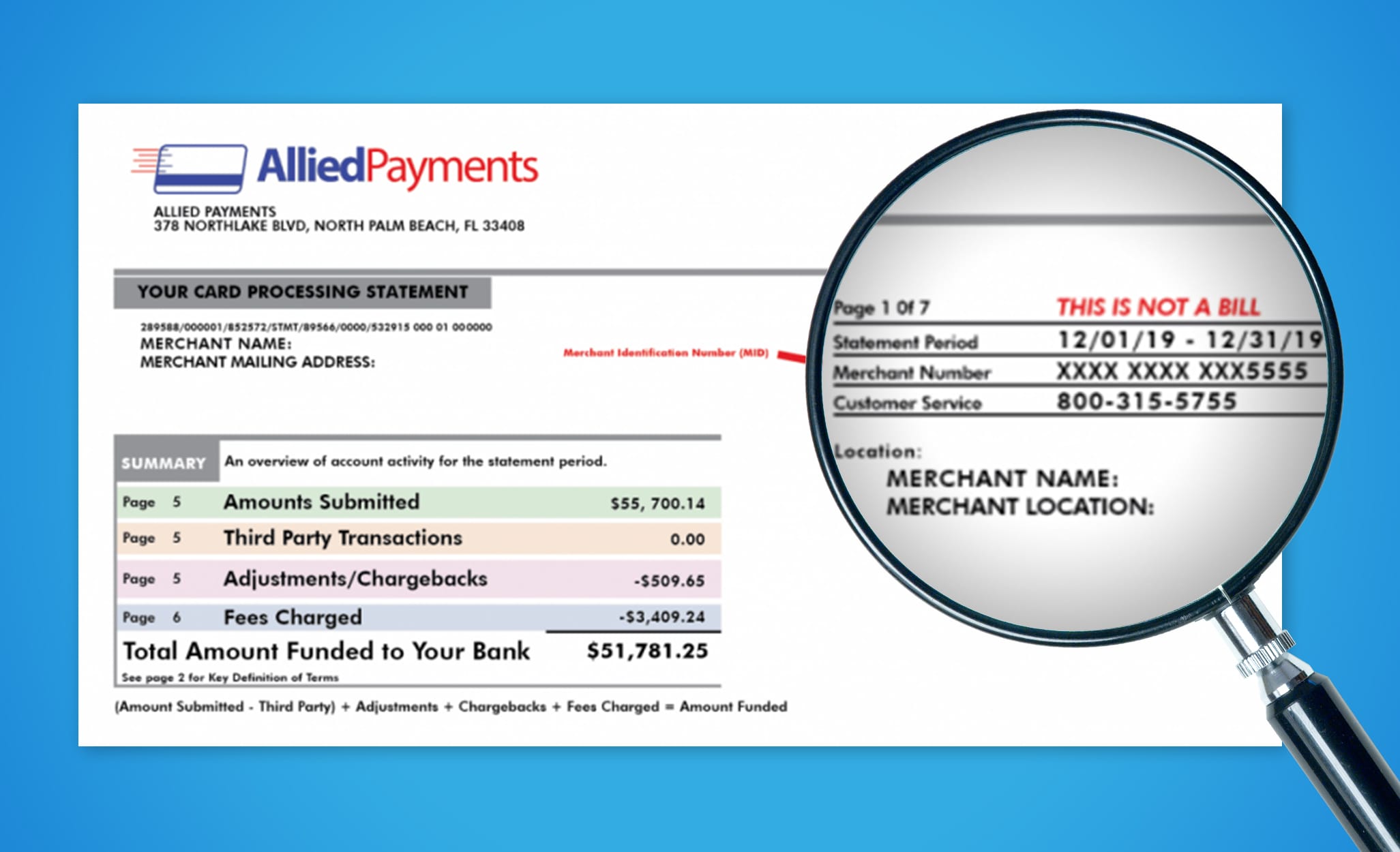
If you already have a Merchant ID, but have misplaced it, there are a few places to find it. Your merchant ID will typically be included on receipts, merchant account statements, and other financial documents. Here is a breakdown of some places you can look to find your MID:
- VAR Sheet: The “value-added-reseller” sheet is a form that should have been provided to you upon approval of your application. This document should have your MID on it, along with other pertinent information about your account.
- Merchant Account Agreement: After you and your processor agreed to the terms and conditions, they should have provided you with an account agreement. This is similar to what a bank offers when you open an account for personal use. The MID should be included in this document.
- Online Account Portal: Most payment processors offer an online portal for their customers. As a client of your specific processor, you should have access to this portal. When you log in, you should be able to look up your MID, transaction history, agreement, and other pertinent information.
- Call Your Processor: If all else fails, call your processor directly. They should be able to provide your MID, after verifying your identity.
How To Protect a MID?
Your MID is an extremely important number and should be kept confidential. If your MID gets into the wrong hands, it could be used to conduct fraudulent business in your name. Be sure to keep your MID in a safe place and do not give your login credentials to unnecessary users.
You should also abide by the terms in your contract agreement. Those terms are setup for a reason and will help ensure the protection of your account and all the data that is stored there. Merchant accounts can be difficult to secure, depending on your industry. If you are approved for one, you should treat it with respect, just as you would your personal social security number and banking information.
Finally, be sure to implement fraud detection and prevention practices. This will help protect not only your consumers’ data but your integrity as a business. Customers prefer to do business with entities who take their security seriously.